
Students discover the hidden life of Arroyo Hondo Creek through hands-on stream ecology.
There is a universal fascination with flowing water and all that lives in and around it. Elementary school classes, high school classes, and even college groups enjoy our stream programs at Arroyo Hondo Preserve, where students have the opportunity to experience a healthy creek ecosystem up close.
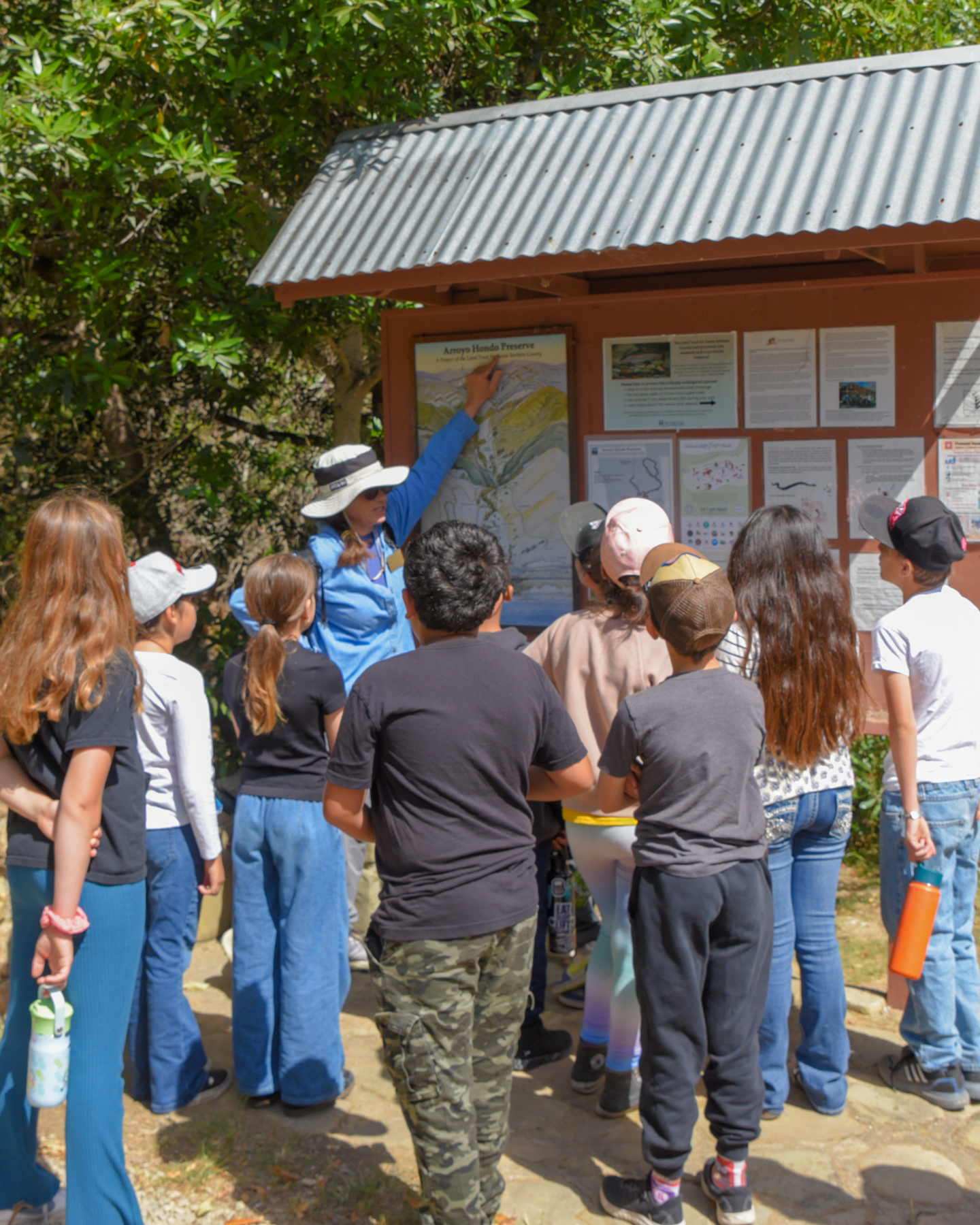
Docents lead small groups of students along the riparian corridor, teaching them about the terrestrial flora and fauna as they walk. Tall sycamore, willow, alder, and bay trees grow along the stream, providing shade, structure, and nutrients that support aquatic species. Along the way, students learn about the importance of streams to land animals, especially during the dry summers that are characteristic of our Mediterranean climate. Coyotes, bears, foxes, mountain lions, and many different birds have all been seen close to Arroyo Hondo Creek.
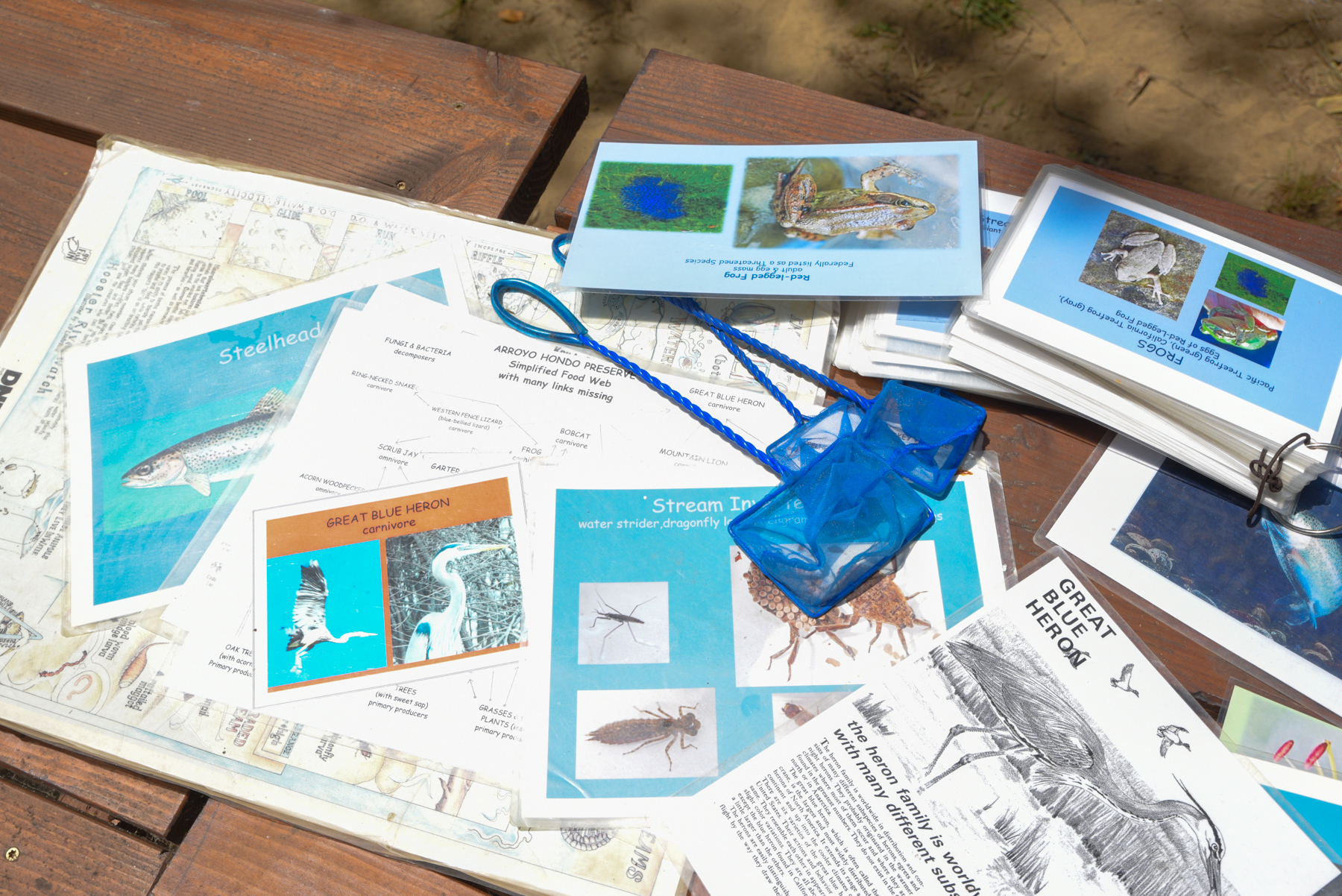
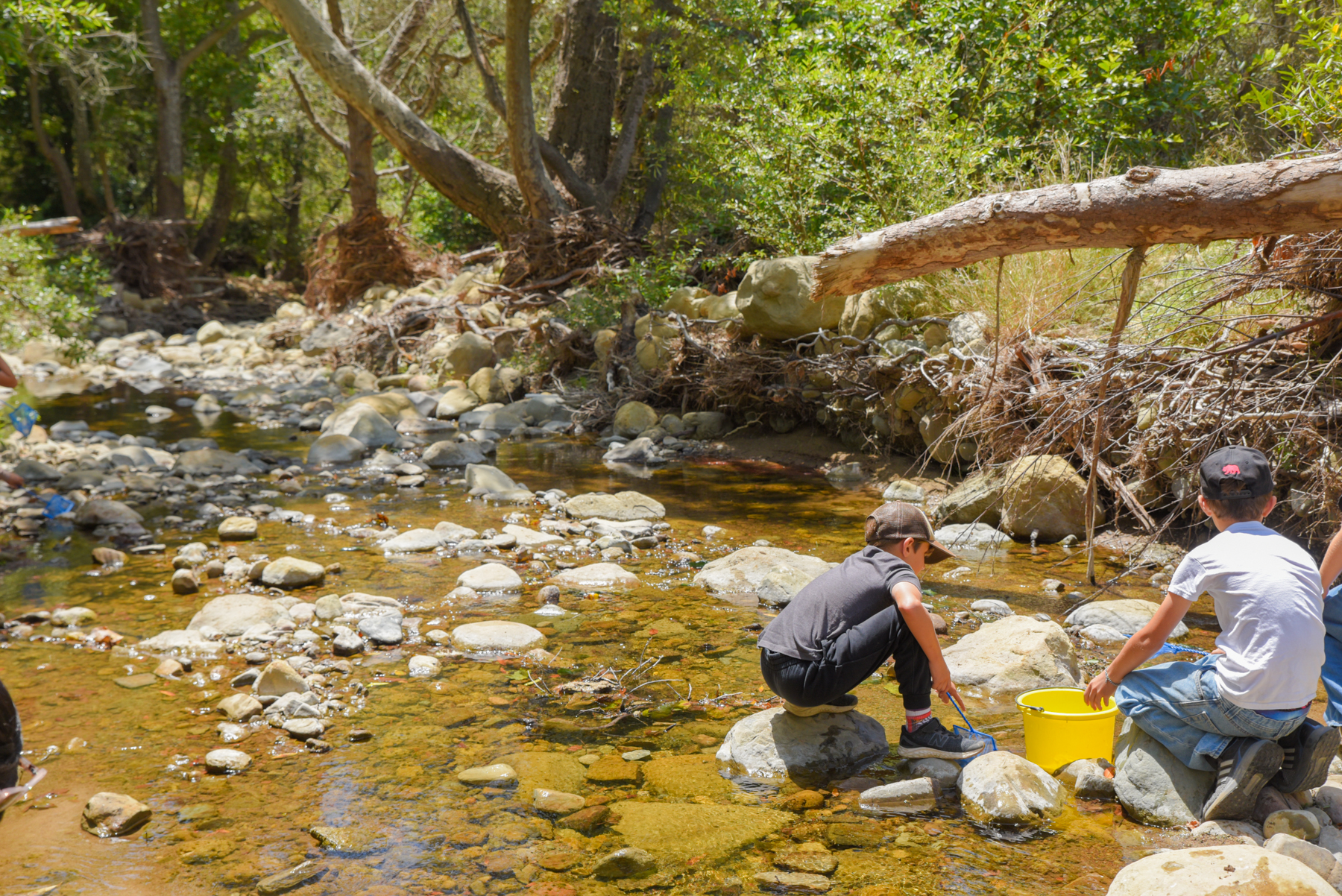
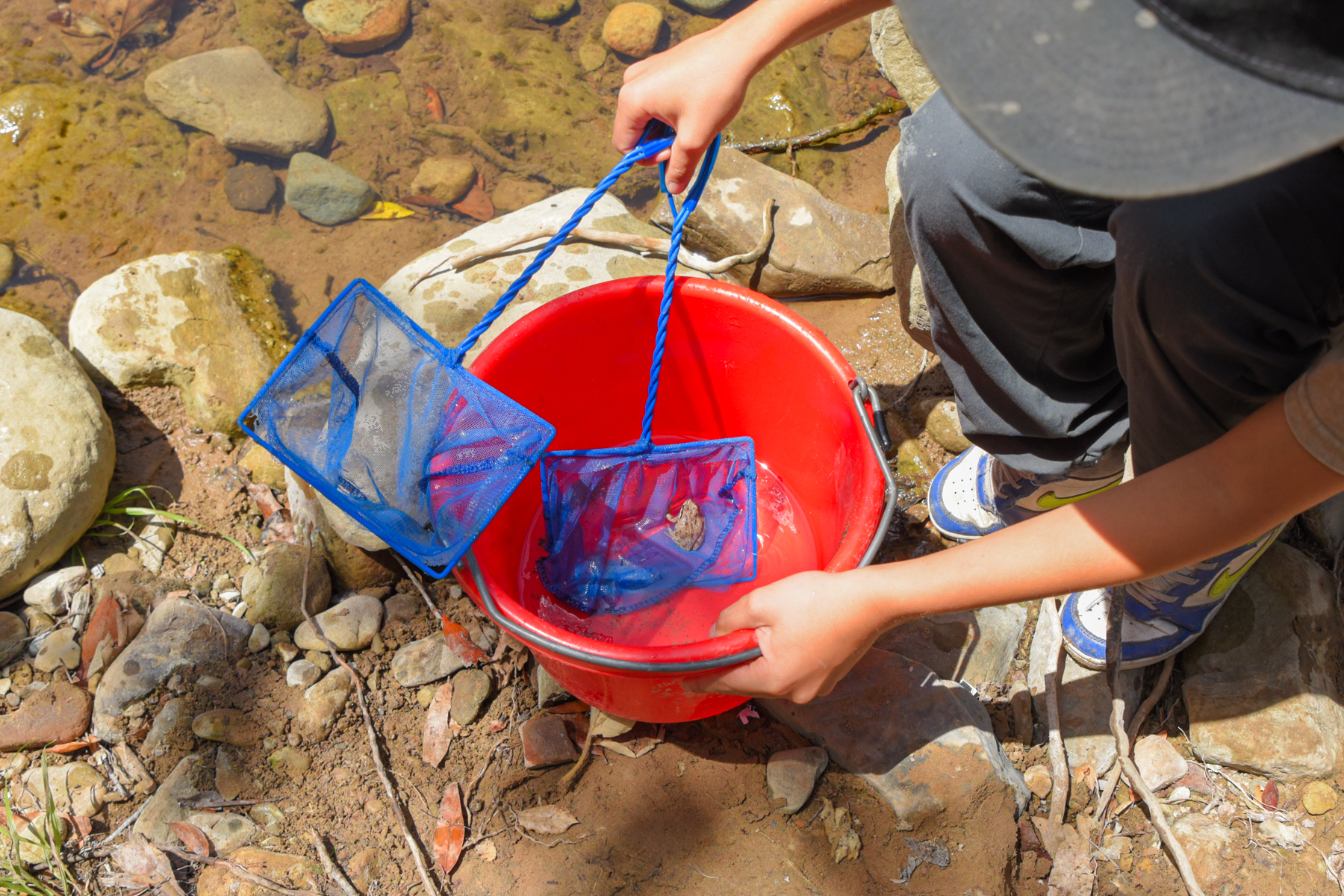
Every group has a hands-on experience at our “stream station,” where students use buckets and nets to observe aquatic invertebrates and learn about their roles in the aquatic food web. Beginning with animals that feed on submerged leaves or the green algae that covers rocks in the streambed, students then learn about the many tiny carnivores that feed on these herbivores.
They may see water pennies moving across stones as they graze on algae, caddisfly larvae building protective “houses” from plant material and sand grains, or water striders walking across the stream’s surface thanks to the hydrophobic hairs on their legs. There is always great excitement when students find a giant water bug, also known as a toe-biter, especially if it is a male carrying eggs on its back. Dragonfly and damselfly nymphs, stoneflies, mayflies, and many other aquatic species are all part of the huge array of life students may observe.
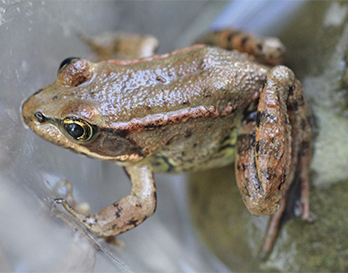
Sometimes, students also learn about rare vertebrate species that make this clear, clean creek their home. Species of special concern, such as the western or Pacific pond turtle and the coast range newt, live in and around the stream, along with the threatened California red-legged frog.
Students also visit the fish passage constructed under Highway 101, which helps fish travel downstream to the ocean and makes it easier for adult steelhead to return upstream to their freshwater spawning habitat.
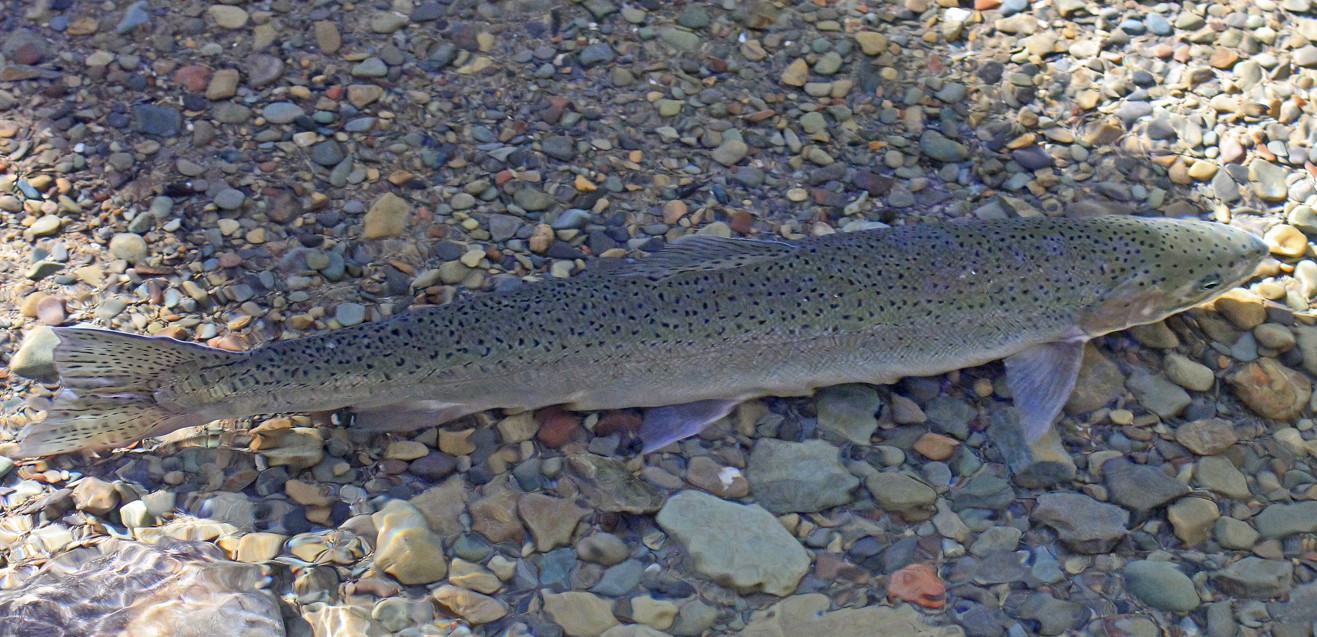
For generations, Arroyo Hondo Creek supported rainbow trout and was known as a spawning stream for Southern California steelhead. After the Alisal Fire in 2021 and the ash and debris flows that followed, trout disappeared from the creek for several years.
Today, the stream is once again part of an important recovery story. In 2025, more than 200 rescued fish were released into Arroyo Hondo Creek after the Palisades Fire affected another Southern California watershed. As of spring 2026, the re-homed fish are doing well and have already spawned twice.
For students, this story helps show that healthy, protected streams are more than beautiful places to explore — they are living systems that can support wildlife, recovery, and resilience.
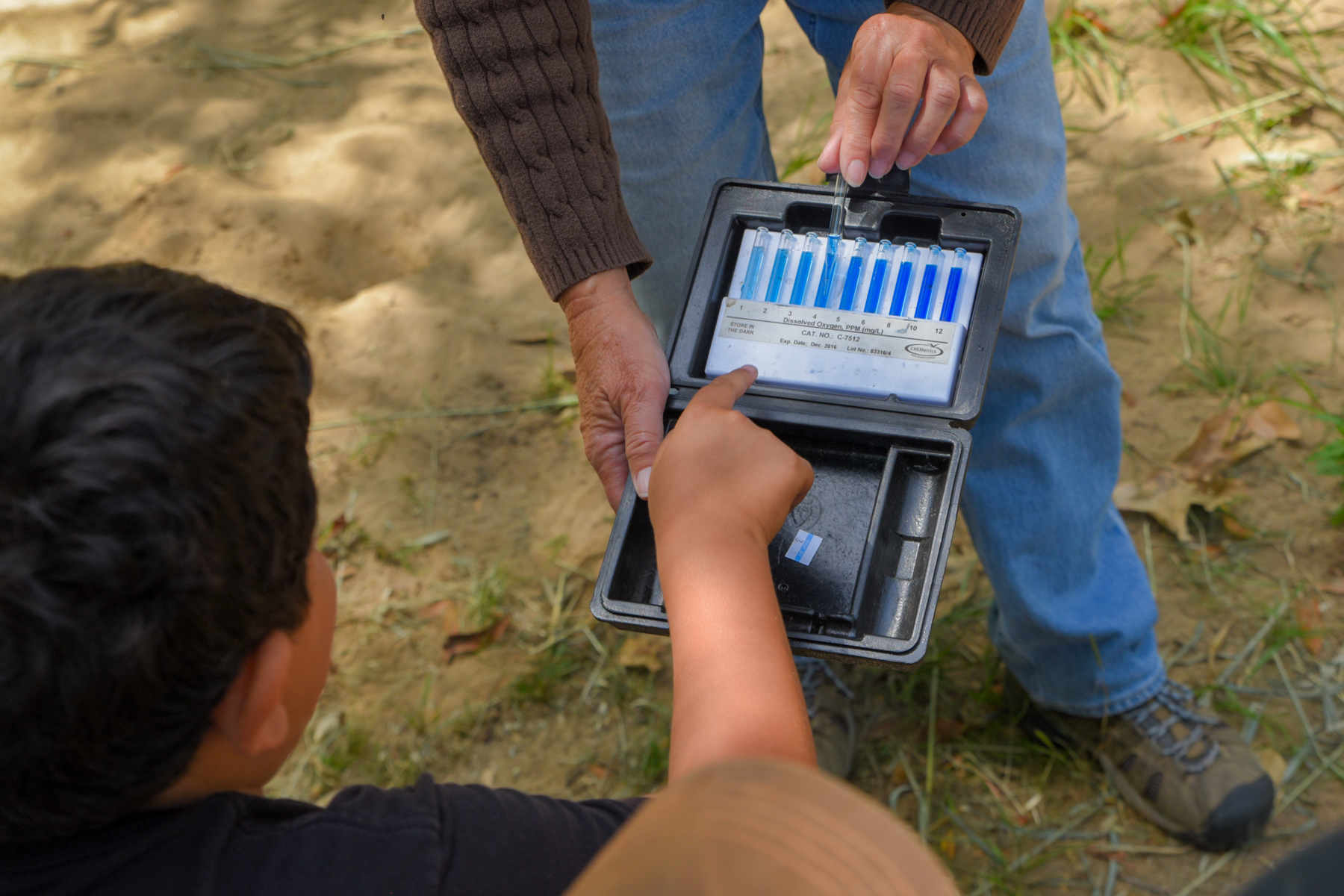
Through the stream ecology program, students learn that there is far more to nature than usually meets the eye. They are encouraged to become keen observers, notice the diversity of life around them, and explore the fascinating adaptations and life cycles of many different species. Along the way, they also learn new vocabulary and leave with a deeper understanding of the living systems that depend on healthy streams.
Experiences like these help students build curiosity, confidence, and a lasting connection to the natural world — the foundation for future stewardship.
Experience Arroyo Hondo Creek
From tiny aquatic insects to towering sycamores and flowing water, Arroyo Hondo Creek offers endless opportunities for discovery.
The Land Trust’s education programs help students experience these living systems firsthand through guided outdoor learning at Arroyo Hondo Preserve. Educators interested in bringing students to the preserve can learn more about our school programs and field trip opportunities.