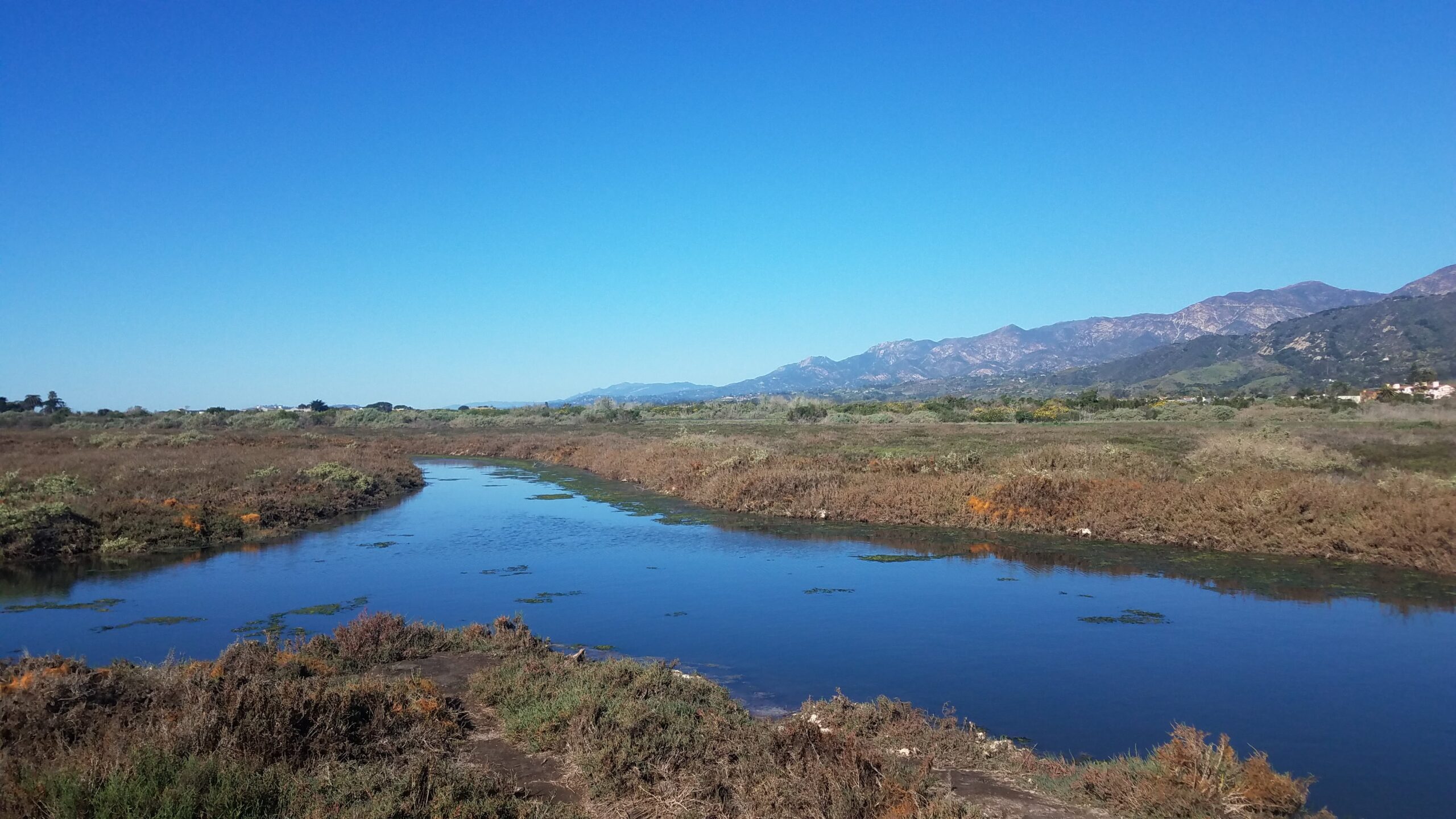

Have you ever driven along highway 101
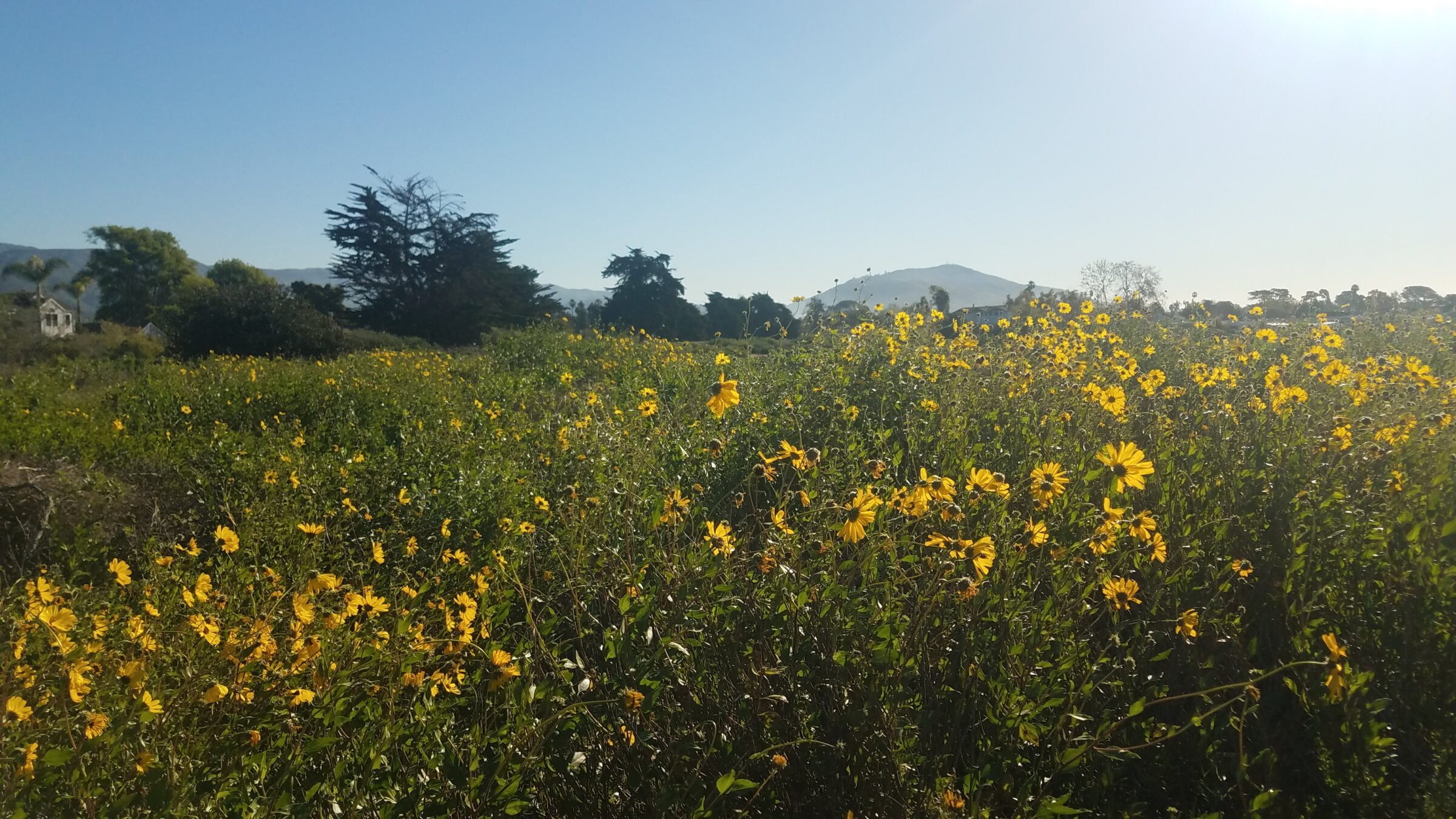
and noticed an extensive stretch of wetlands next to the City of Carpinteria? This unique ecosystem is called a salt marsh, and it’s one of the last and largest remaining in Southern California.
Salt marshes are highly productive coastal wetlands that are regularly flooded and drained by tides. They form an ecotone (a transitional zone) between upland areas and the sea. Salt marshes are dominated by dense stands of salt tolerant plants called halophytes, and often support estuaries where fresh and saltwater mix.
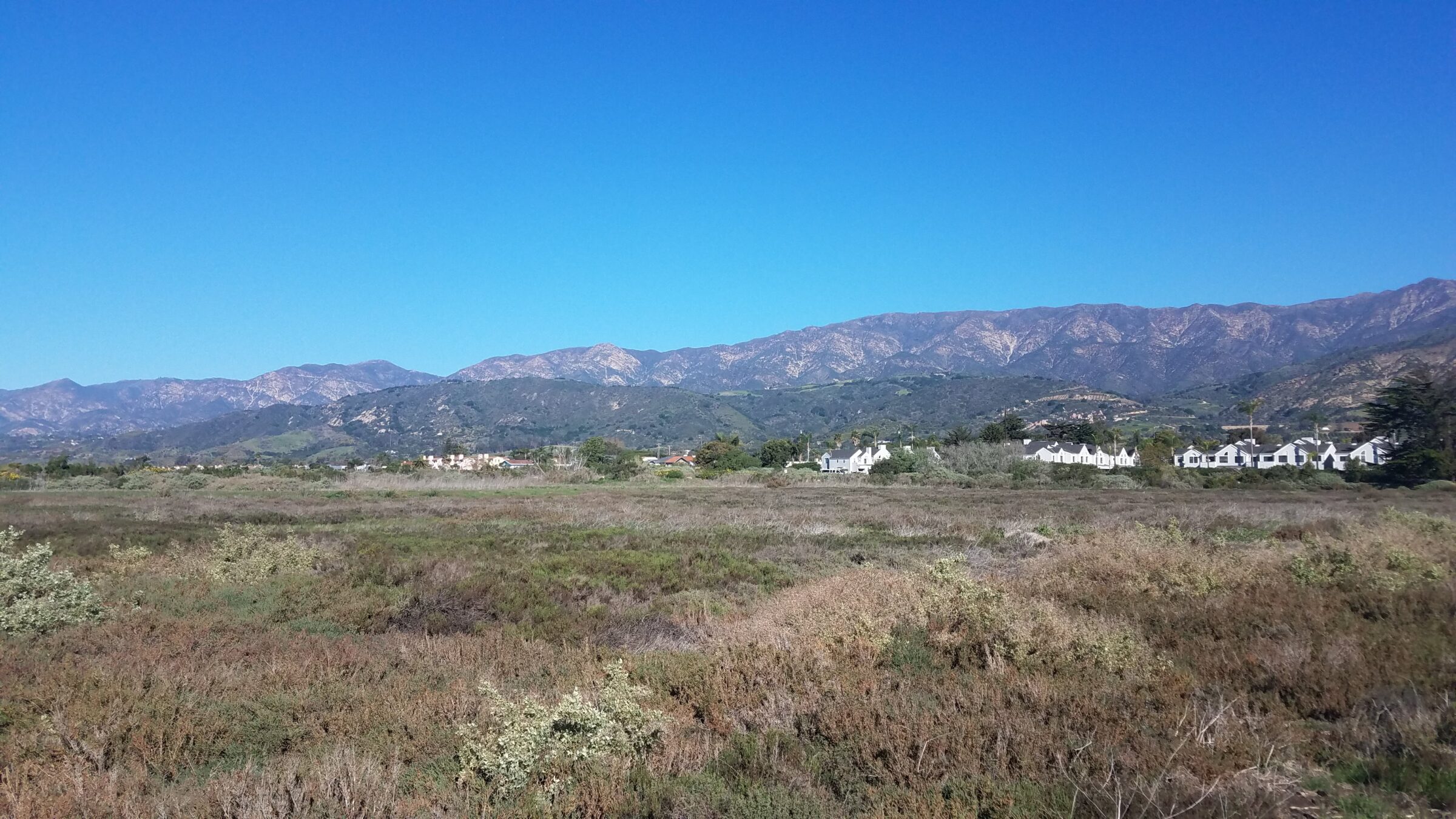
Sometimes defined as “ecological guardians,” salt marshes and the estuarine habitats they protect are important nurseries for fish and other wildlife. Salt marshes also help to filter runoff, reduce erosion, and protect against storm surges. It’s estimated that one-acre of salt marsh has the ability to absorb 1.5 million gallons of floodwater!
Despite their many benefits, the United States loses around 80,000-acres of salt marshes and other coastal wetlands annually. California has lost approximately five million-acres of its historic habitat, including 90 % of Southern California estuaries. This high volume of habitat loss throughout the region makes our local salt marsh even more important.
The Carpinteria Salt Marsh is an approximately 230-acre coastal wetland situated at the base of the Franklin and Santa Monica creek watersheds. It’s characterized by a series of natural and artificial channels that slowly meander into the ocean, forming a brackish estuary that is a nursery for halibut and other regional fish.
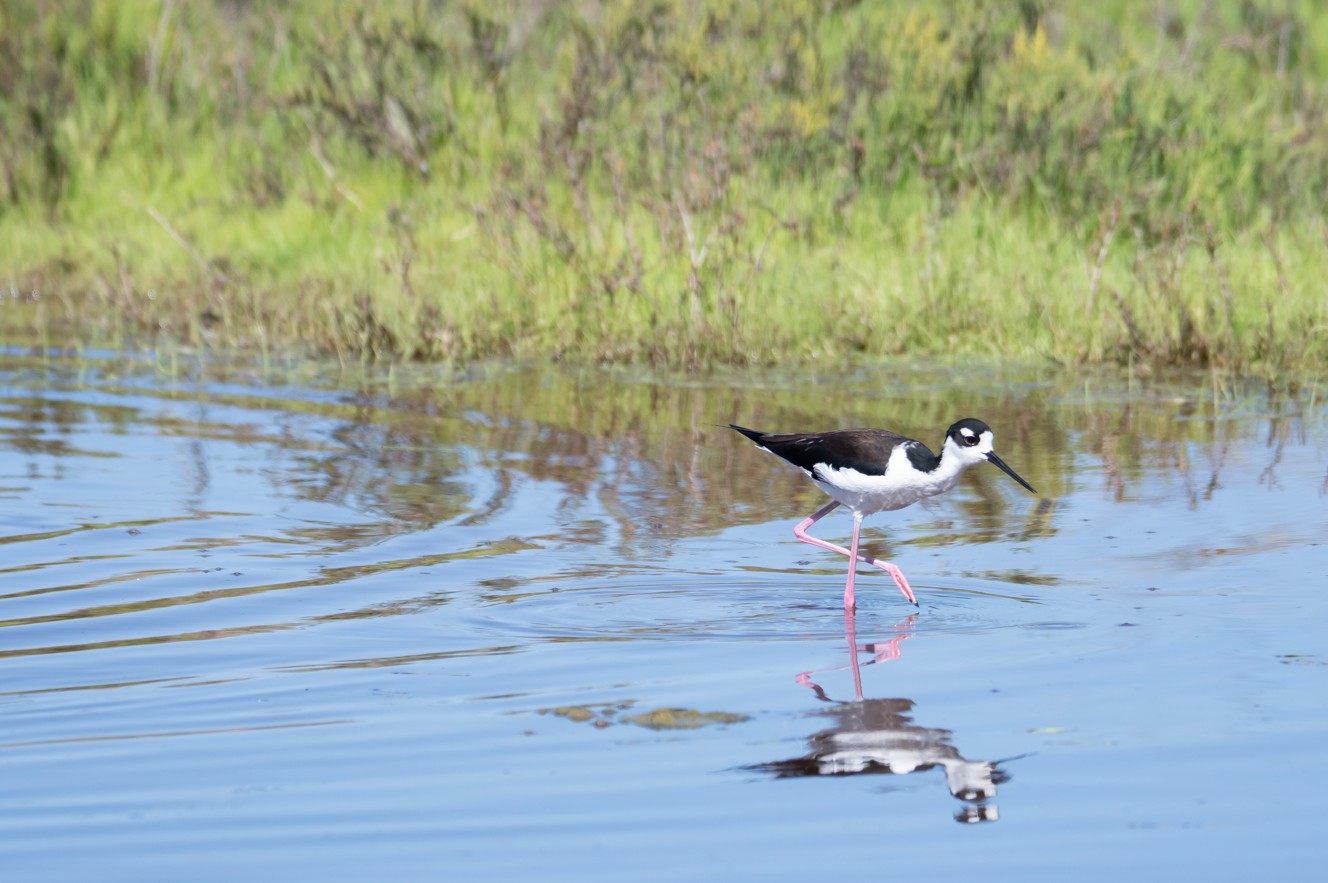
The salt marsh also provides breeding habitat for endangered species of birds, including the State and Federally listed Belding’s savannah sparrow and light-footed Ridgway’s rail. Other rare species found in the marsh includes the endangered plant, salt marsh bird’s beak. This species forms a patchy ground cover that has a semi-parasitic relationship with other salt marsh halophytes like pickleweed.
Conservation efforts to protect the Carpinteria Salt Marsh began in the 1960’s when Ken Norris, a UC Santa Cruz professor and co-founder of the UC Natural Reserve System (NRS), identified the area as an important ecosystem worth protecting. Over the next 10 years, the NRS worked to acquire 120-acres of the marsh and establish the Carpinteria Salt Marsh Reserve. Over the next 30 years, the UC NRS, City of Carpinteria, Land Trust for Santa Barbara County and other local stakeholders were able to conserve the remaining 210-acres. The Land Trust currently owns and manages about 35 acres of the marsh.
The Carpinteria Salt Marsh continues to harbor endangered species and protects our coast from erosion and flooding. It is a beloved place in our community where you can routinely see school groups and people from all walks of life enjoying the marsh.